



Bambridge battery backup installation with a Solis inverter and home battery
Bristol & South Wales

Battery Backup

EPS, island mode or UPS? Keep the essentials powered in a power cut — with selected backup circuits or a whole-home gateway, designed around your home.

NICEIC Approved Contractor
NICEIC Domestic Installer
MCS Certified
RECC Member
Power when the grid goes down

A battery does not automatically mean backup

A home battery can reduce your reliance on grid electricity day to day, but keeping the lights on during an outage needs the right equipment and wiring.

We design a backup supply that safely isolates from the grid, then powers either agreed essential circuits or your home's electrical supply through a compatible gateway.

You do not always need to pay for whole-home backup. For many households, keeping the lights, router and selected kitchen circuits running is the more practical, lower-cost choice.

EPS — Emergency Power Supply
A compatible inverter's backup output can supply designated circuits when the grid is unavailable. Output and switching time depend on the model.
Island mode
The system operates separately from the grid during an outage. Correct isolation, protection and earthing are essential to keep the installation and network workers safe.
UPS — Uninterruptible Power Supply
A supply intended to bridge an interruption for connected equipment. EPS and island mode are not automatically UPS-grade: we check transfer times for anything that must not restart.
Two ways to back up your home

Whole house or just the essentials?

The right choice depends on what you want to keep running, your existing equipment and your budget.

Typically lower cost

Essential-circuit backup

Where supported, we use the inverter's backup output and move selected circuits onto a separate consumer unit — a dedicated backup board.

  • Choose essentials such as lighting, Wi-Fi and selected kitchen circuits.
  • Leave high-demand loads off the backup supply unless specifically designed for them.
  • Usually avoids the cost of a whole-home gateway, although safe changeover and protection equipment are still required.
  • Use the available battery energy on the things that matter most.
Broader coverage

Whole-home gateway

A compatible gateway or backup interface isolates the property from the grid and allows the battery system to supply the home's electrical installation.

  • Broader circuit coverage, subject to the system's supported configuration.
  • Generally costs more because of additional equipment and installation work.
  • Battery and inverter output still limit how much can run at once.
  • Large loads may need load management or exclusion — whole-home does not mean unlimited power.
A real Bambridge installation

Lights, Wi-Fi and kitchen essentials

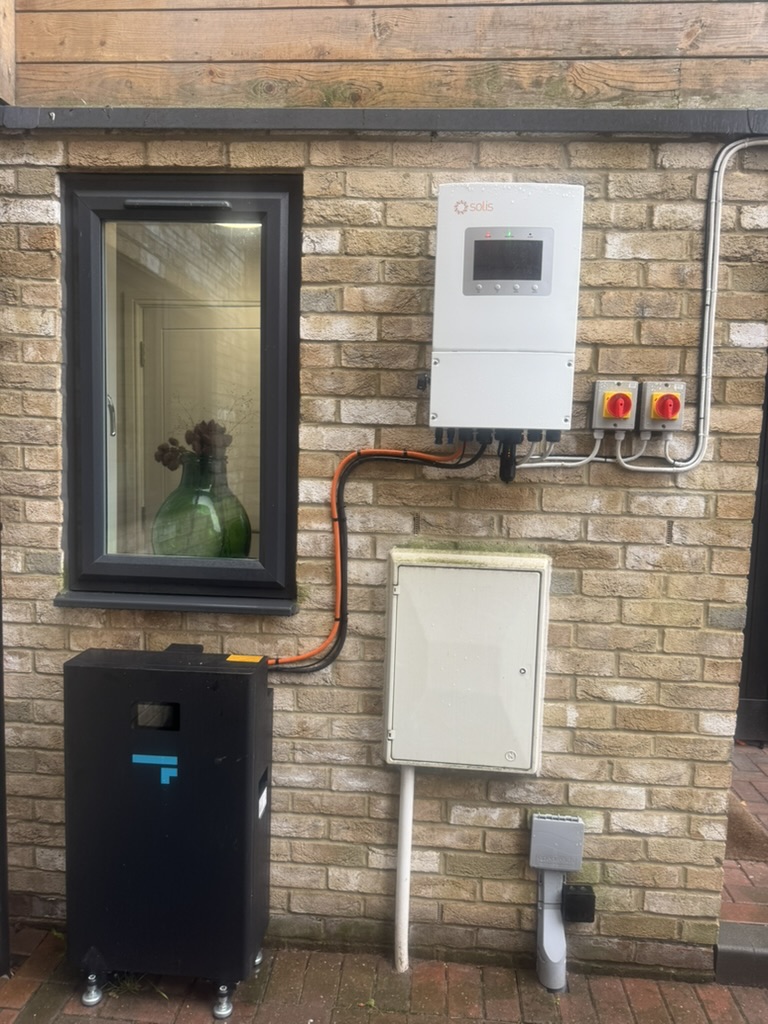
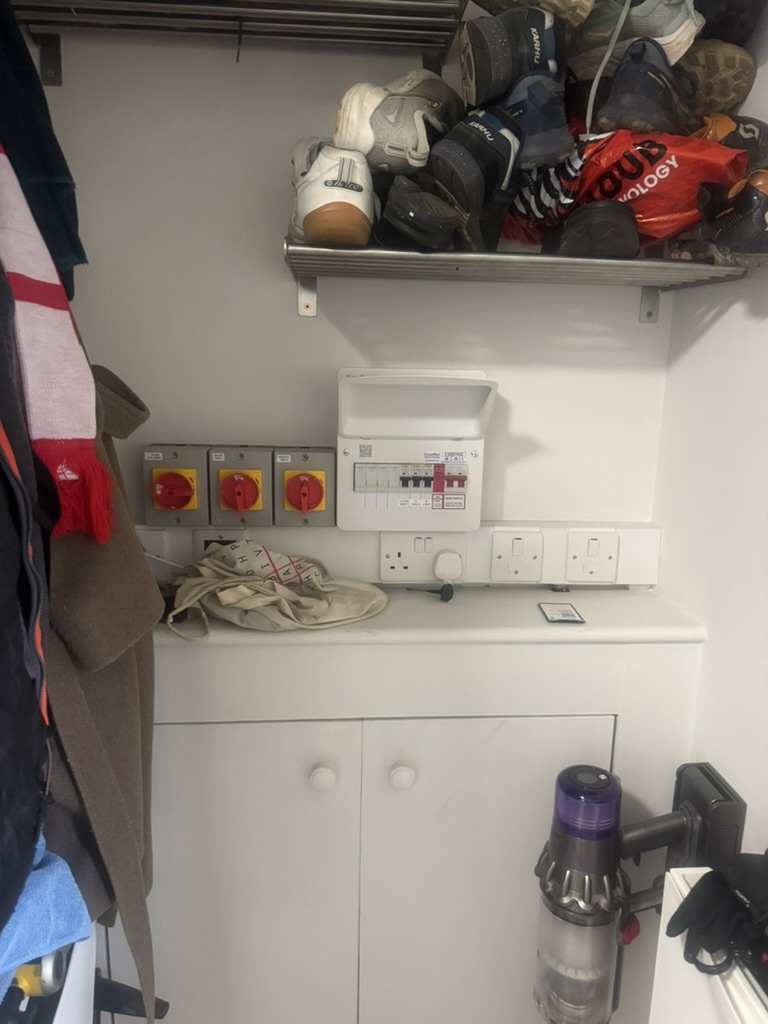
On this installation, we moved selected circuits to a new backup board so the lighting, Wi-Fi and agreed kitchen circuits can be supplied during a power outage.

Installed Solis inverter, battery and associated electrical equipment at a Bambridge customer property
The inverter and battery installation supplying the home's designed backup system.
Separate backup consumer unit and isolators installed for selected lighting, Wi-Fi and kitchen circuits
The separate board for the selected essential circuits — rather than backing up every circuit in the house.
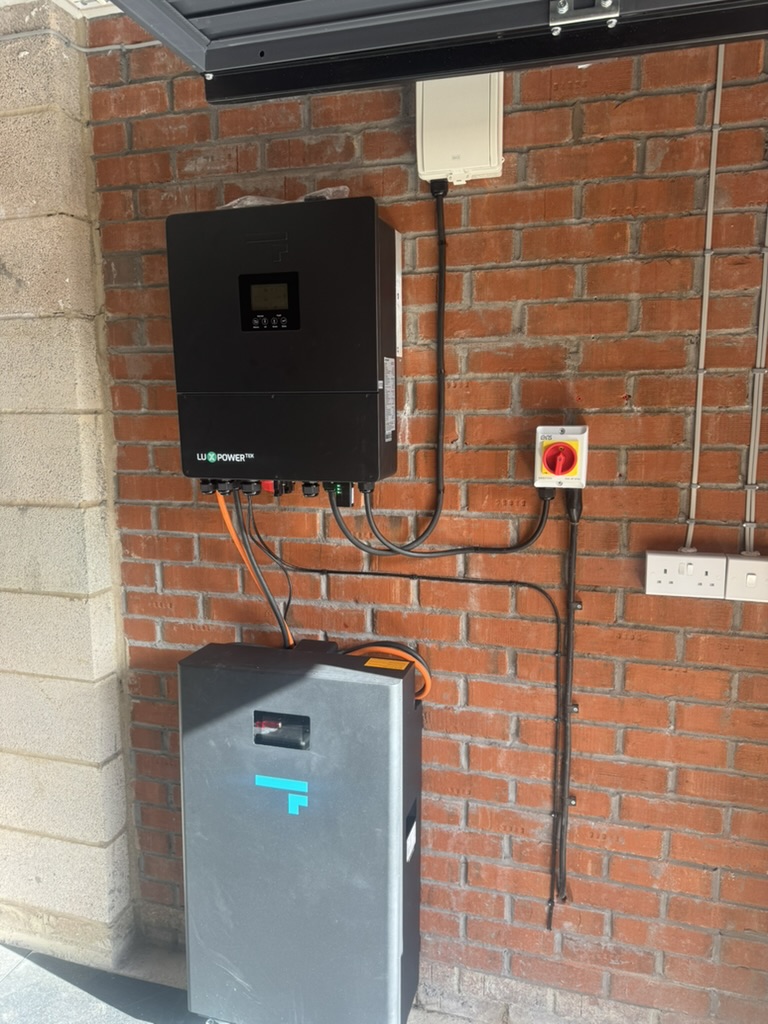
LuxPower inverter and home battery installed on a brick garage wall with electrical isolation equipment
Another Bambridge installation, with a LuxPower inverter and home battery neatly fitted in a garage.
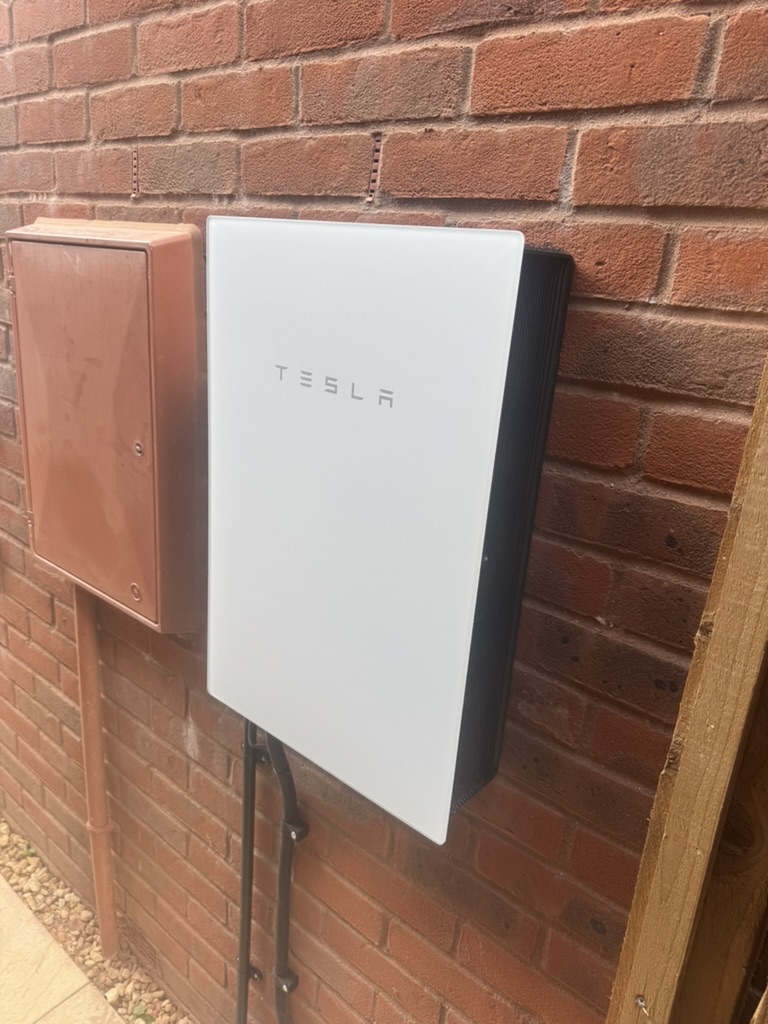
Wall-mounted Tesla equipment on an exterior brick wall with neatly routed cabling
Wall-mounted Tesla equipment at a Bambridge installation.
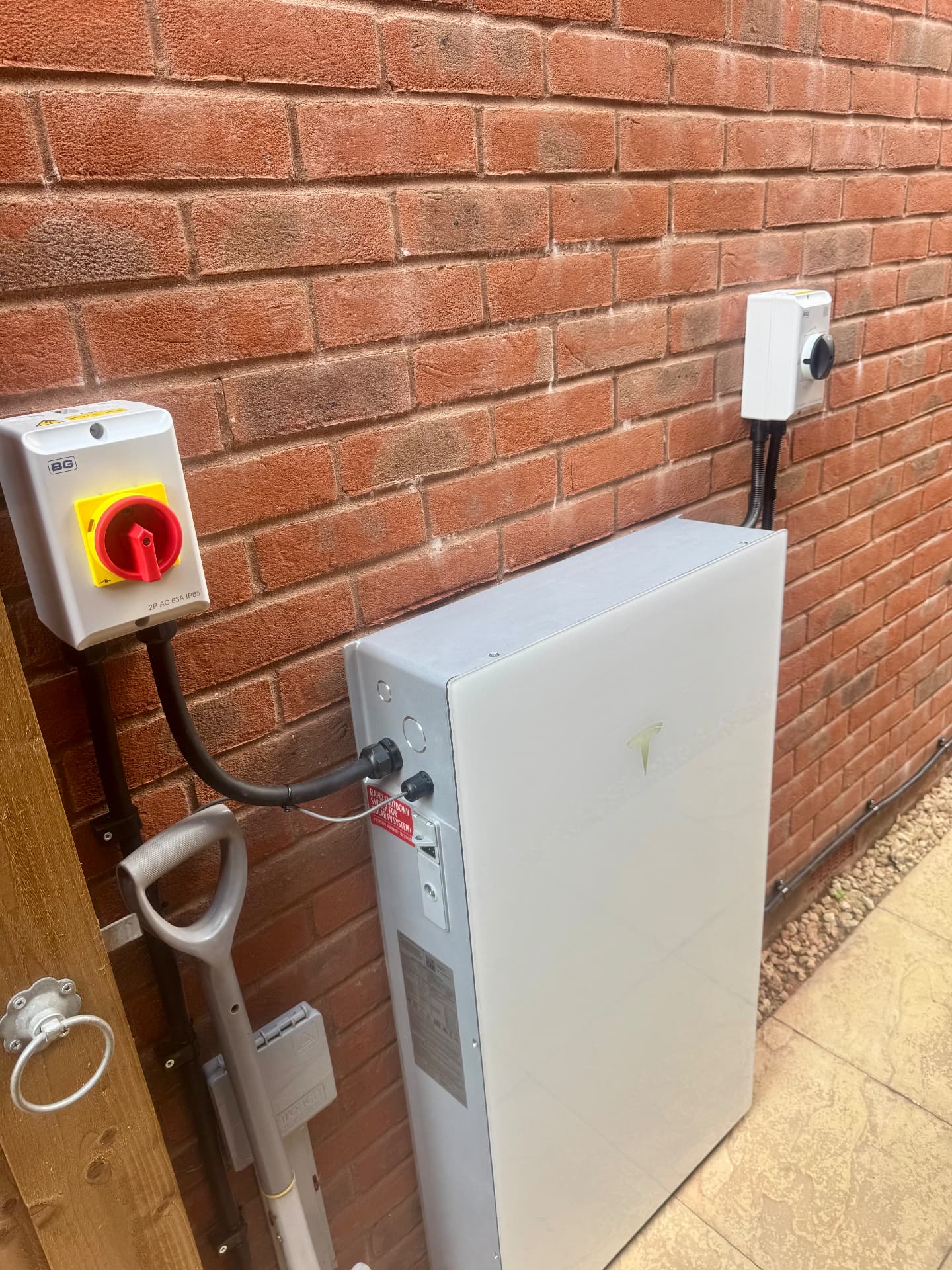
Outdoor Tesla home battery on a brick wall with electrical isolators and cabling
An outdoor Tesla battery installation with associated electrical isolation equipment.
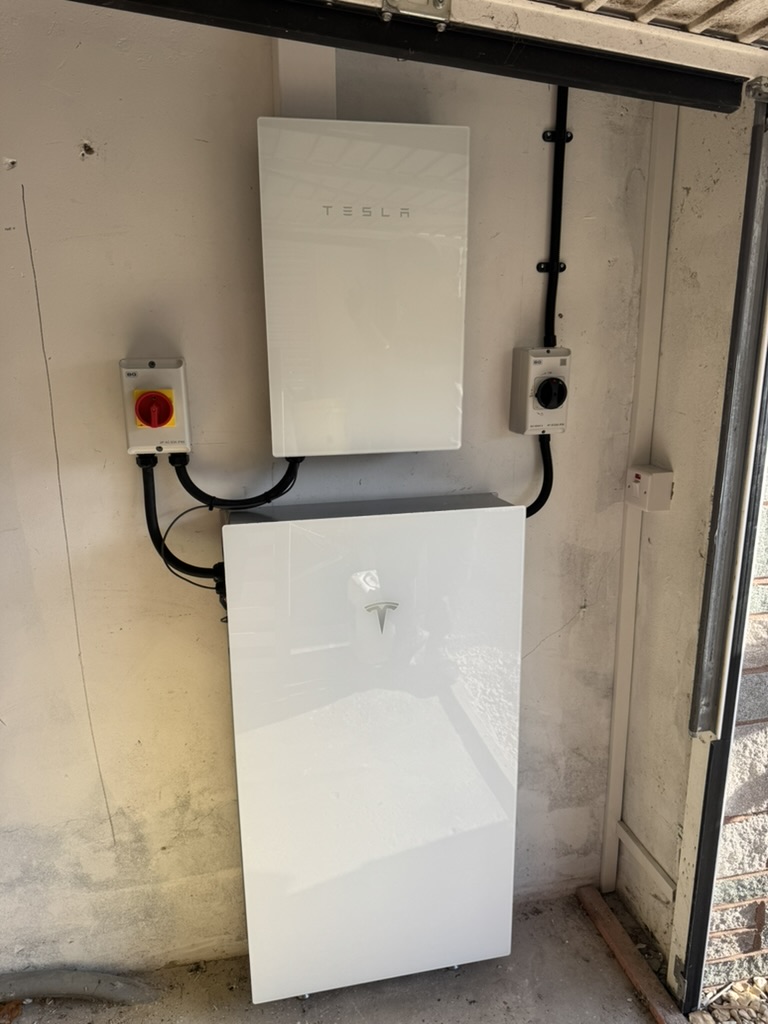
Tesla battery and wall-mounted equipment inside a garage with electrical isolators
A garage installation with Tesla battery equipment. Backup coverage depends on the system's configuration.

Kitchen backup means the circuits and appliances agreed in the design, not automatically an oven, hob or every socket at once. Available power and runtime remain limited by the inverter, battery charge and connected loads.

Know the limits

Power and energy are different

Power (kW) is how much your backup can supply at one time. A kettle, oven, electric shower or EV charger can demand a lot of power; even a well-charged battery cannot exceed its backup output limit.

Energy (kWh) is how much is stored. Runtime depends on the usable charge remaining, your reserve setting, appliance demand and system losses. Small essential loads generally stretch the available energy further.

Designed before installation

Choose what matters to you

We check your battery and inverter compatibility, identify the circuits you want backed up and assess the existing wiring, protection and earthing.

Your quotation sets out the proposed coverage and limitations. At handover, we explain the backup reserve, what can run together and how the system behaves when grid power returns.

Your questions answered

Battery backup FAQs

Will any home battery work in a power cut?

No. Standard grid-connected solar and battery systems normally stop supplying the home when the grid fails. Backup needs compatible equipment, a correctly designed backup connection and safe isolation from the grid.

Is essential-circuit backup cheaper than a whole-home gateway?

It is typically a much cheaper option where the inverter already has a suitable backup output. We move the agreed essential circuits onto a separate backup board instead of backing up the entire property. The final cost depends on equipment compatibility, cable routes and the electrical work required.

Will my Wi-Fi stay on without interruption?

Backup can power your router, but the transfer time varies by system and it may restart. Internet access also depends on equipment outside your home remaining operational. If uninterrupted operation matters, we check the manufacturer's transfer specification and whether a dedicated UPS is needed.

Can solar panels recharge the battery during an outage?

Some compatible systems can keep generating and recharge the battery while isolated from the grid. Others cannot. This depends on the inverter, solar connection and backup design; it is not an automatic feature of every installation.

Can I add backup to an existing battery system?

Sometimes. We check your inverter and battery model, backup output, protection, earthing and existing consumer unit before recommending essential-circuit backup or a whole-home gateway.

Keep your essentials powered.

Tell our local team what you want to keep running. We'll assess whether essential-circuit backup or a whole-home gateway is right for your property.